
The Student Engagement Story: A Conversation for Instructional Leaders
Every school tells a story of student engagement. That story appears in school improvement plans, professional learning priorities, and instructional expectations. It also takes shape through the decisions leaders make every day: what we notice during walkthroughs, the questions we ask, the practices we celebrate, and the time we protect for learning.
Our moves, influenced by what we understand and value about student engagement, send powerful messages. Every school tells a story about student engagement, and leadership moves help write that story.
The Curious Side of the Story
What comes to mind when you picture an engaged classroom?
Most of us have a mental model of what engagement looks like. Often, that model includes visible participation, active discussion, and collaboration, and those can certainly be indicators of engagement, but they represent only part of a much larger instructional story.
We tend to see what we look for, and the beliefs and expectations we hold about engagement can influence what we notice during classroom visits and how we interpret what we observe. As instructional leaders, we need to ask ourselves a few simple questions: What evidence am I using to determine whether students are engaged? What assumptions might I be bringing with me? What am I curious about?
Curiosity, itself a natural condition for engagement, creates space for us to become more engaged in the very thing we're examining. It helps us move beyond first impressions and better understand the thinking, instructional decisions, and learning experiences unfolding in front of us.
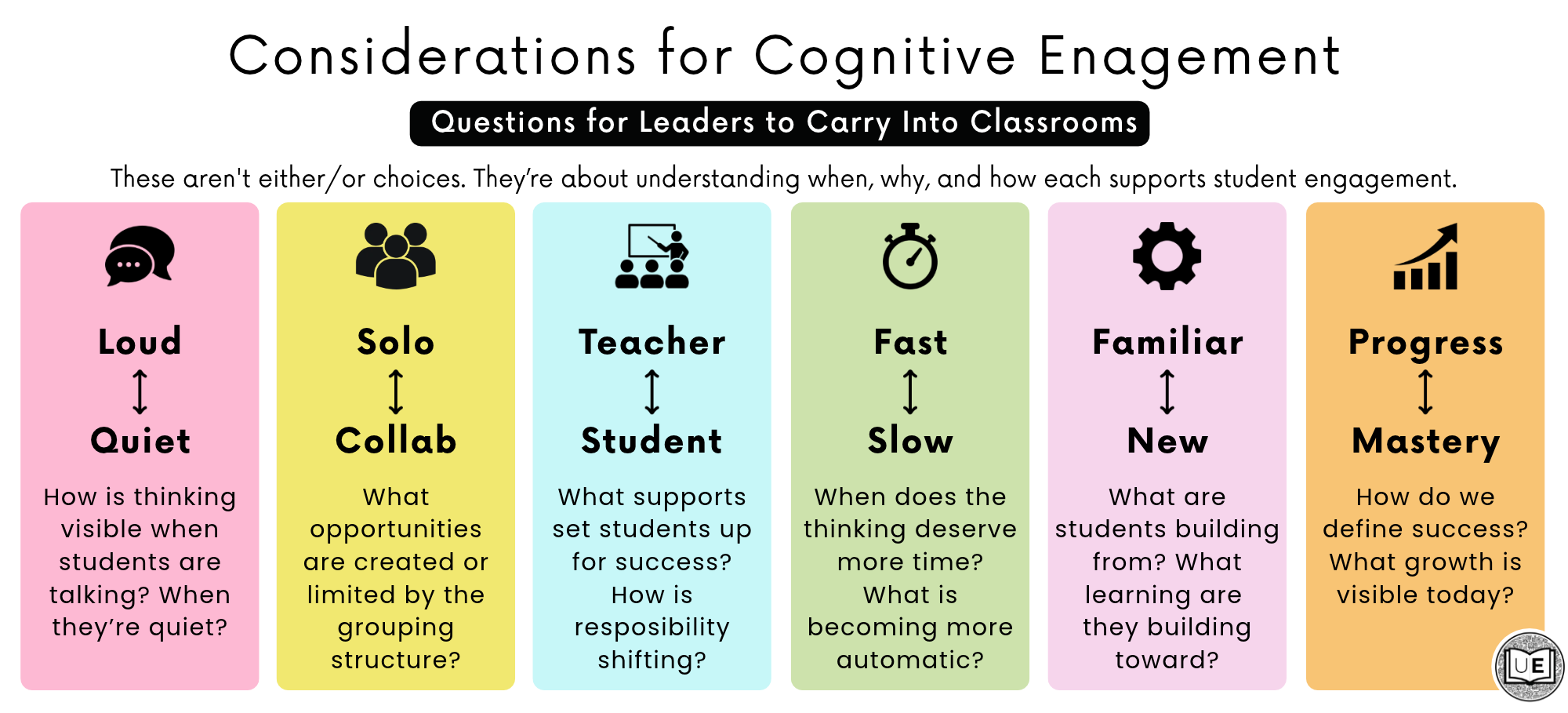
A quick glance can create illusions, so let's stay curious before drawing conclusions. The instructional considerations that follow invite us to look beyond first impressions.
When Quiet Speaks Volumes
Can we actively listen for engagement? If so, what does it sound like?
A classroom visit may reveal a room filled with discussion or one where students are working quietly. Neither observation, if measured by volume alone, tells us much about engagement. Instead of focusing on the volume, get curious about the purpose behind the sounds (or silence).
Are students retrieving information? Processing new ideas? Formulating responses? Engaging in discussion? Preparing to contribute to a discussion? Different cognitive tasks call for different instructional structures, and those structures often sound different from one another.
Many meaningful conversations begin with quiet thinking. Likewise, powerful discussions present new ideas, different perspectives, and questions that need time for independent processing and reflection.
Listen for the rhythm of learning. Effective classrooms often demonstrate a variety in the volume, shifting purposefully between reflection, discussion, collaboration, and independent work as students engage in different kinds of cognitive work.
When Teaching Takes the Lead
I Do? You Do? Who Do?
A common question during classroom visits is "Who is doing the work?", but perhaps it is more helpful to push past the Who? and ask Why?
When students are learning something new or complex, it may be entirely appropriate for a teacher to carry more of the cognitive responsibility through modeling, explanation, worked examples, and guided practice. At other times, students may be applying their learning independently, collaborating with peers, or engaging in discussion.
Neither observation tells the whole story, and one of the most important things a leader can continue to bring into the classroom is curiosity.
What are students learning? How familiar is the content? What support might they need in order to be successful? Engagement requires thinking, and thinking depends on knowledge. Explicit instruction remains one of the most efficient ways to build that knowledge, and, even so, is one piece of the bigger picture. Yes, we want the send-off, and we also need to consider what sets students up for a successful one.
Effective instruction moves fluidly and flexibly between teacher modeling, guided practice, and independent application. While the cognitive responsibility shifts, both teacher and students have active roles every step of the way, asking us to also ask, How?
When Progress Takes Time
What does engagement look like when students are still on the path to mastery and what do we mean by mastery?
If our definition of mastery is limited to the full extent of a standard, sometimes that reality can unintentionally create an expectation for immediacy. A message can become right answer, right now, even when students are still developing the knowledge and skills needed to get there. Mastery of a standard may be the destination, but there are meaningful moments of progress worth recognizing in every lesson along the way.
There are times when we want students to respond quickly and accurately. Fluency and automaticity are important outcomes of learning. But they develop through time, purposeful practice, feedback, and opportunities to build and strengthen understanding. In these moments, engagement has a confident and efficient energy. As knowledge and skills become more automatic, students have greater cognitive capacity to tackle something new, something complex, or something they haven't quite mastered yet.
What can students already do? What are they learning to do? What can they do today that they couldn't do before? What are they learning to do today that is setting them up for what they can't do yet?
The path to mastery is not always immediate, but progress is visible along the way. It's worth celebrating, not as a place to stop, but as a reason to keep going.
Instructional Commitments We Can't Compromise
In your previous picture of student engagement, were there a few hands in the air? Raising hands might be one of education's oldest forms of muscle memory, but what does a show of hands really show us? A raised hand gives us more information about a student's willingness to respond and less data on their reasoning.
Many classrooms have moved beyond relying on raised hands to guide participation, finding more intentional ways to invite every student into the thinking. That's a shift worth recognizing, celebrating, and reinforcing. Of course, there's still a time and place for a show of hands. Taking a quick vote or gauging interest? Raise away!
Hands down, one of the most important instructional commitments we can make is ensuring every student has opportunities to think deeply, formulate ideas, and respond. Intentional response routines, from individual think time and written responses to partner exchanges and whole-class response protocols, help make participation an expectation rather than an invitation reserved for volunteers.
Every student deserves opportunities to think, respond, process, and progress, and that is a commitment we cannot compromise. There's creativity in how we make those opportunities possible, and sometimes a little courage in making them happen.
The Courage to Engage
There's a vast amount of vulnerability in the classroom. Teachers are navigating a lot. The pressure to perform, the chase of the pacing calendar, the squeeze of an overpacked lesson. Sometimes, letting a thoughtful pause linger, revisiting a concept, or trying a new routine can feel difficult when there's already so much to accomplish.
Sometimes those decisions can create the very conditions that invite students to take risks of their own. Sharing an idea they're not quite sure about, asking a question, or revising their thinking in front of peers takes courage, too. Students are taking a risk when they respond, and social risk is real.
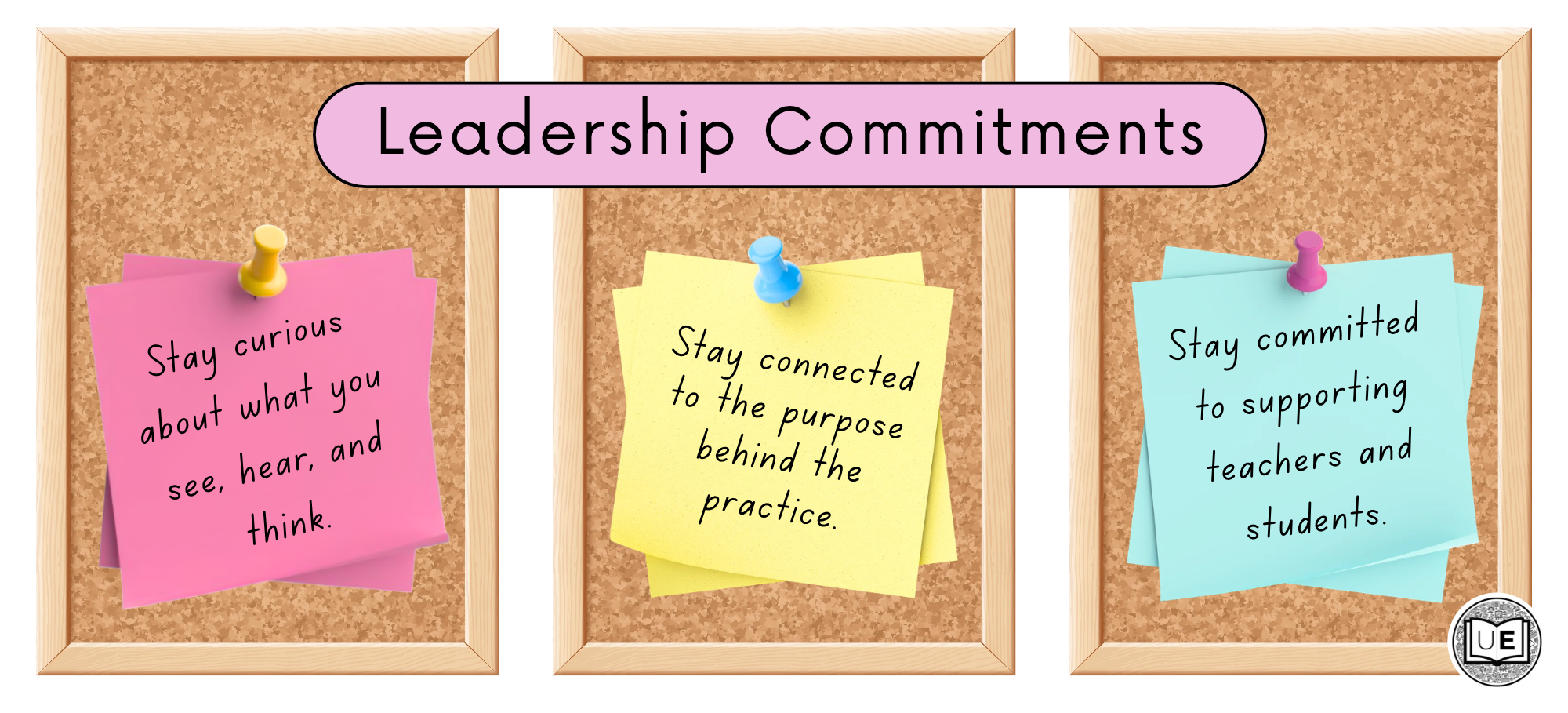
Leading for engagement takes courage, too. The courage to question assumptions, stay curious a little longer, protect time for thinking, and support teachers in making purposeful instructional decisions.
The stories we tell ourselves about engagement influence the stories others hear. As leaders, those stories shape what we celebrate, what we reinforce, and what we encourage teachers to continue doing.
Sticking to the Story
Sometimes, the simplest leadership moves are acts of recognition that reinforce the instructional decisions we hope to see more often.
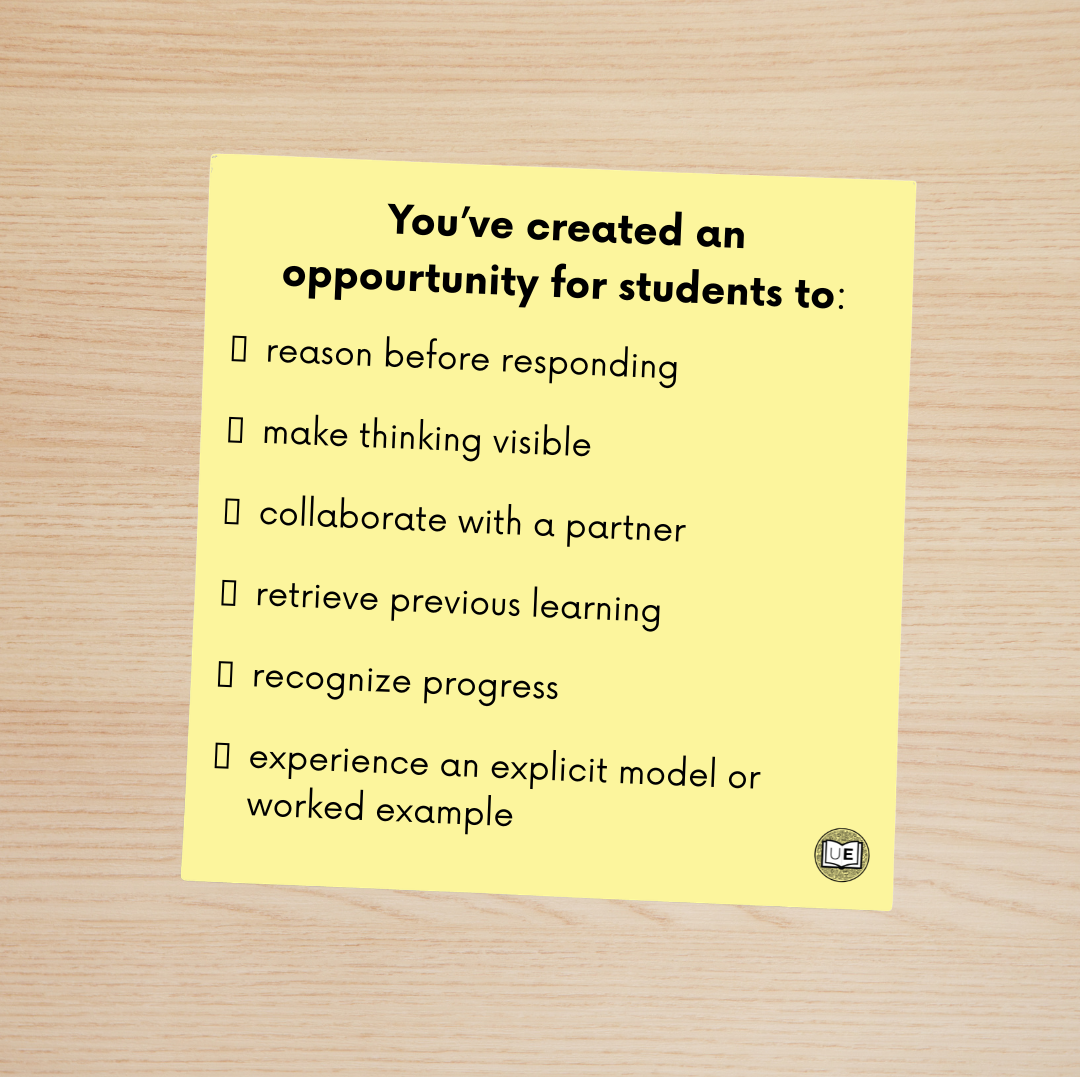
Ready to uncomplicate your next leadership move? Start with something small. Something sticky, perhaps? The next time you visit a classroom, look for the opportunities teachers are creating for students to engage in the learning. Use our printable sticky note and leave it behind as a reminder that their intentional work is seen, valued, and making an impact.
A small note. A meaningful message. One more way to strengthen your school's engagement story.
Bring This Conversation to Your School
What could change if your entire team had the opportunity to examine student engagement together?
The conversation doesn't have to end with this article. PD in a Box® | Digital Edition gives you more than three hours of research-based professional learning to explore student engagement with your teachers, examine instructional practices, and identify ways to strengthen student thinking, participation, and learning.
We provide the content, facilitator guidance, editable slides, and participant resources. You bring the knowledge of your school and your teachers.
We create. You facilitate. On your schedule.

References & Further Reading
Dehaene, S. (2020). How we learn: Why brains learn better than any machine...for now. Viking.
Rosenshine, B. (2012). Principles of instruction: Research-based strategies that all teachers should know. American Educator. https://www.aft.org/ae/spring2012/rosenshine


